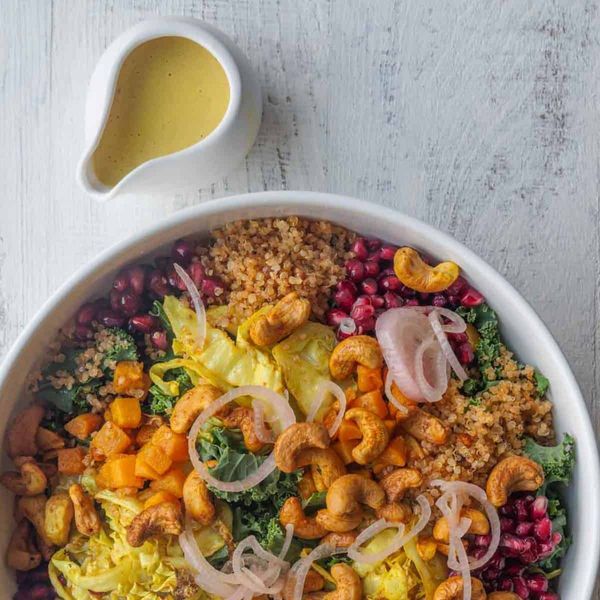

This Anti-Inflammatory Salad Dressing contains curcumin, the active compound in turmeric, that shows a significant improvement in morning stiffness, walking time, and joint swelling, with the complete absence of any side effects in people with rheumatoid arthritis, a chronic systemic inflammatory disorder.
Save This Recipe!
Type your email & I’ll send it to you!
As a Registered Dietitian Nutritionist, I am not one to use terms such as ‘anti-inflammatory’ lightly. But the evidence is clear. Curcumin, the active compound in turmeric, is a safe and effective ingredient in helping to reduce inflammation in rheumatoid arthritis and osteoarthritis.
Turmeric is the dried powdered root stalks of the turmeric plant-a member of the ginger family-from which the orange-yellow pigment curcumin can be extracted. The spice turmeric is what makes curry powder yellow, and curcumin is what makes turmeric yellow.
Adding black pepper enhances the bioavailability of curcumin, increasing its effectiveness. Piperine, the compound responsible for the pungent flavor in pepper, plays a crucial role in this synergy. The combination of curcumin and piperine significantly boosts the bioavailability of curcumin, and surprisingly, just a small amount of black pepper is sufficient for this effect!
Tahini enhances this effect even more. Heart-healthy fats, the type found in tahini, increase the absorption of curcumin, so it goes directly to the bloodstream and bypasses the liver. (The liver makes molecules more water soluble so they are easily excreted and therefore less bioavailable. Black pepper and fat suppress that process so more ends up in the bloodstream.)
This healthy salad dressing was inspired by my 3 Healthy Salad Dressing recipes on this site, as well as this Miso Tahini Dressing.
Jump to:
👩🏼🌾 Ingredients
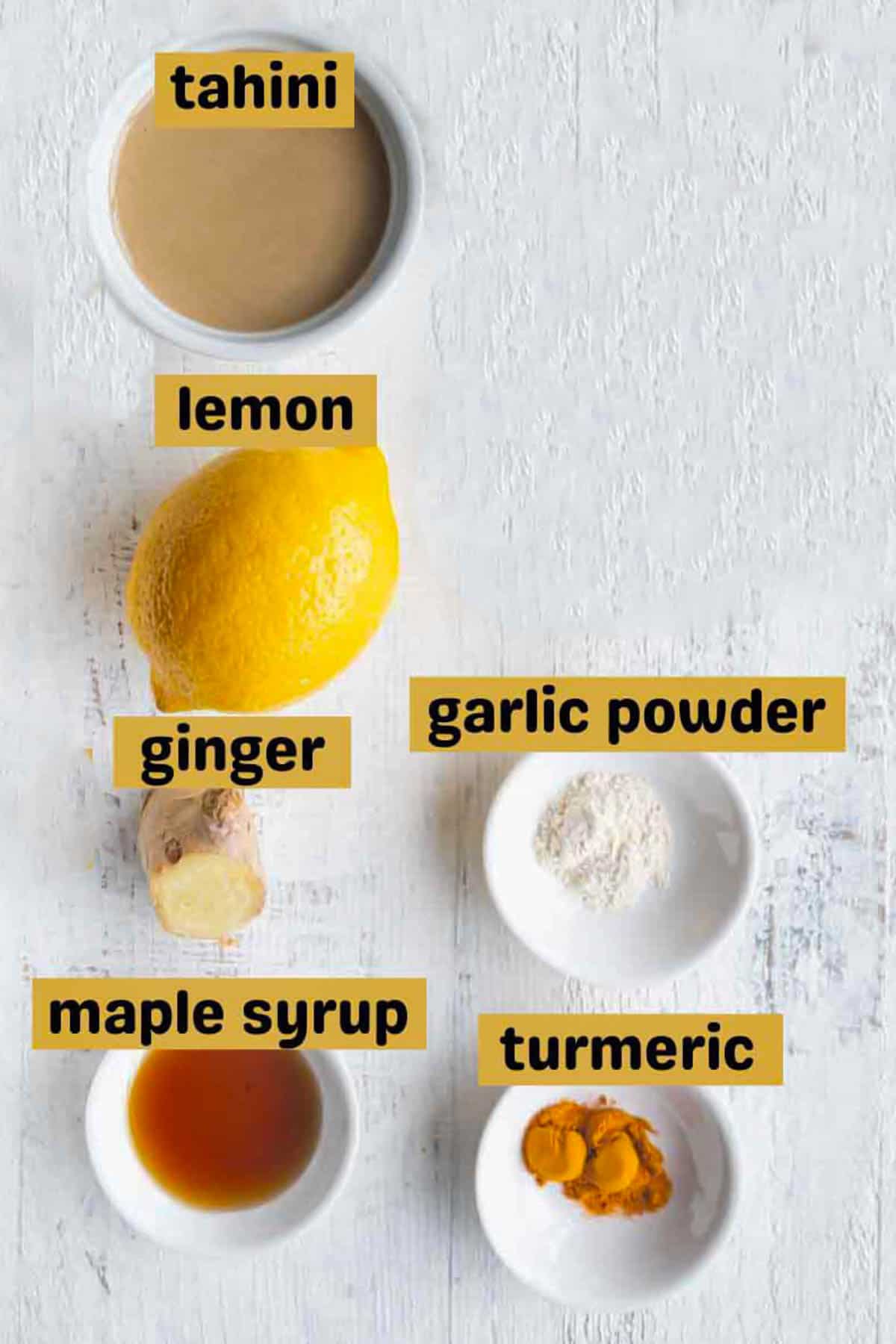
- Tahini
- Lemon
- Ginger
- Maple syrup
- Turmeric
- Garlic powder
- Black pepper
See the recipe card for quantities.
🧄 Substitutions
- Tahini – instead of tahini, use cashew or coconut yogurt, adjusting the quantity to taste
- Turmeric and black pepper – Substitute with ½ teaspoon curry powder or to taste. (Curry powder typically contains both black pepper and turmeric.)
- Ginger – substitute with ⅛ teaspoon ginger powder instead as needed
- Lemon – use apple cider vinegar instead as needed
- Maple syrup – substitute with agave as desired
This dressing pairs deliciously with my Roasted Vegetable Salad on this site. For more healthy salad dressings, visit my Vegan Dressing Recipes page.
📖 How to Make Anti-Inflammatory Salad Dressing
For the full recipe with quantities, scroll down to the bottom of the post. This is an overview.
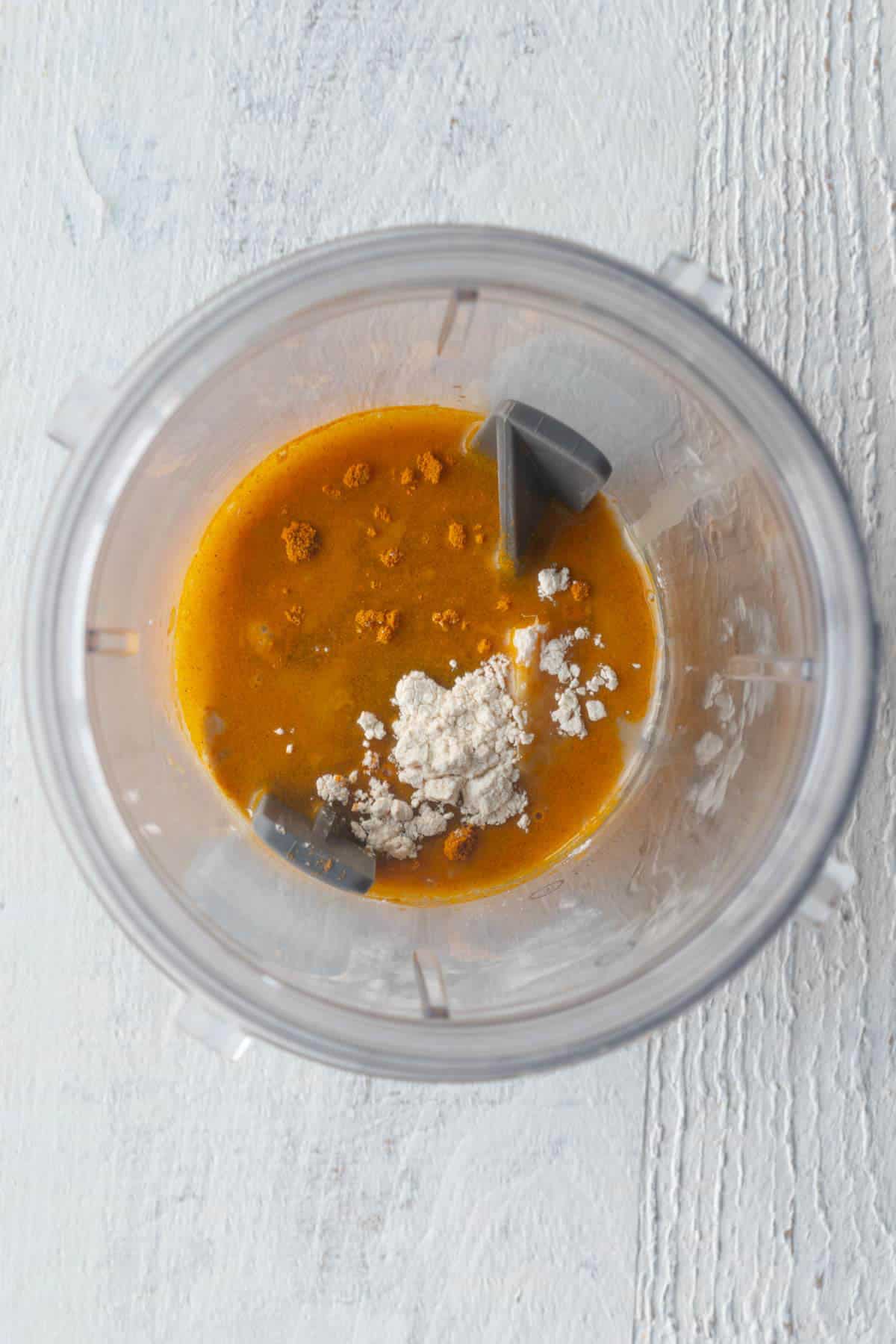
Step 1. Blend or whisk: Transfer the tahini, lemon juice, maple syrup, ginger, turmeric, and garlic powder to a medium bowl or blender.
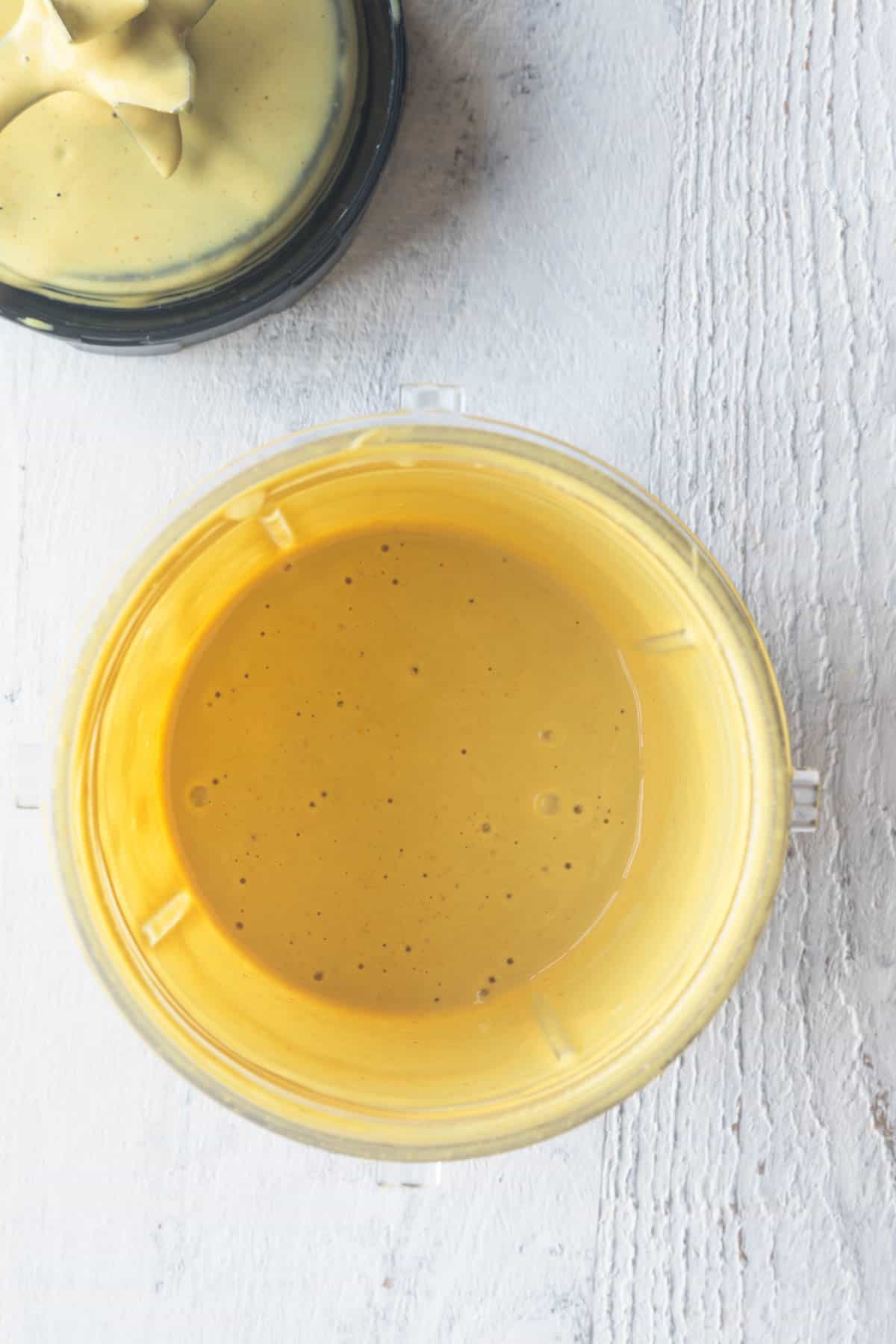
Step 2. Add 2 tablespoons warm water. Blend or mix well until the desired consistency.
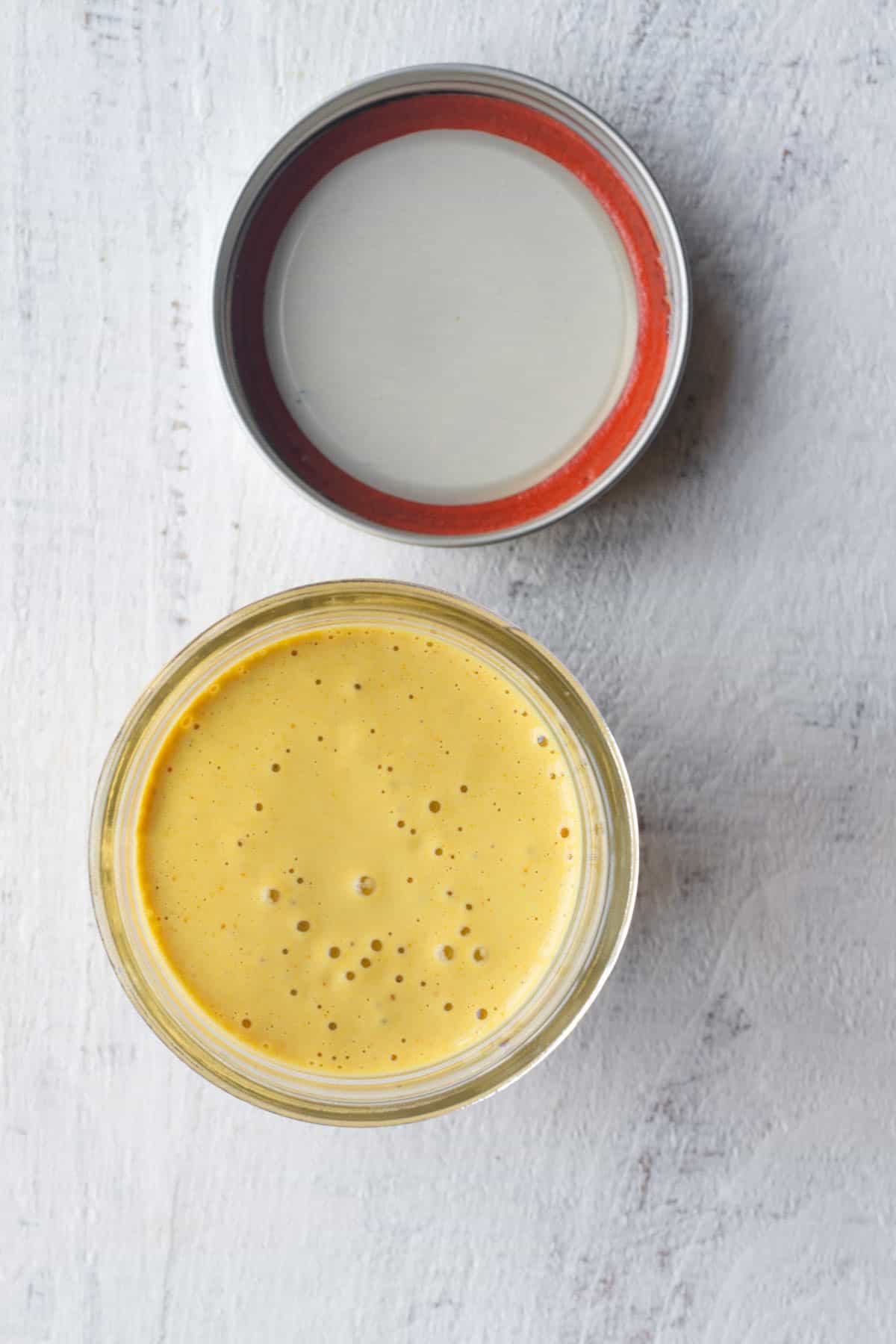
Storage: Refrigerate Anti-Inflammatory Salad Dressing in an airtight container for up to 4 days.
✔️ Top tip
When substituting ingredients, ensure to incorporate heart-healthy fat along with black pepper to harness the anti-inflammatory benefits of curcumin found in turmeric.
🙋🏽♀️ Recipe FAQs
What are some foods that may help with inflammation?
Foods that might help reduce inflammation include tomatoes, extra-virgin olive oil, green leafy vegetables (kale, spinach, collards), nuts (almonds and walnuts), and fruit (blueberries, cherries, strawberries). To fight inflammation, choose whole, unprocessed foods with no added sugar.
Do nightshades cause inflammation?
The controversial link between nightshades and increased inflammation is not backed up by research. Numerous studies have failed to find evidence that eating nightshade vegetables gives rise to inflammation. Some of the researchers theorize that, while not a direct cause of inflammation, nightshade vegetables may aggravate existing inflammation in some people.
However, everyone’s food intolerances are different, so if you feel worse after eating nightshades, it is understandable that you would avoid eating them.
👩🏽🍳 Made This Recipe?
Please leave a review for Anti-Inflammatory Salad Dressing and share your creation with me on Instagram. It makes my day to see you recreate my recipes.
I would love it if you would ⭐️ rate this recipe and leave a comment. Thank you in advance.
Anti-Inflammatory Salad Dressing
This Anti-Inflammatory Salad dressing contains curcumin, the active compound in turmeric, that shows significant reduction in joint swelling.
Prep Time 5 minutes
Cook Time 0 minutes
Total Time 5 minutes
Course Dressing
Cuisine Vegan
Servings 5 servings
Calories 134 kcal
Ingredients
- ¼ cup plus 2 tablespoons tahini
- ¼ cup fresh lemon juice (about 2 small lemons)
- 2 tablespoons maple syrup
- ½ inch ginger (grated if not using a blender)
- 1 teaspoon ground turmeric
- ½ teaspoon garlic powder
- ⅛ teaspoon black pepper or to taste
- Salt to taste
Save This Recipe!
Type your email & I’ll send it to you!
Instructions
-
Blend or whisk: Transfer the tahini, lemon juice, maple syrup, ginger, turmeric, garlic powder, and black pepper to a medium bowl or blender. Add 2 tablespoons warm water. Blend or mix well until the desired consistency.
-
Add salt (or salt substitute) to taste.
Notes
-
- Tahini – instead of tahini, use cashew or coconut yogurt, adjusting the quantity to taste
- Ginger – substitute with ⅛ teaspoon ginger powder instead as needed
- When substituting ingredients, ensure to incorporate heart-healthy fat along with black pepper to harness the anti-inflammatory benefits of curcumin found in turmeric.
- Storage: Refrigerate in an airtight container for up to 4 days.
Nutrition
Calories: 134kcal | Carbohydrates: 11g | Protein: 3g | Fat: 10g | Saturated Fat: 1g | Polyunsaturated Fat: 4g | Monounsaturated Fat: 4g | Sodium: 8mg | Potassium: 130mg | Fiber: 1g | Sugar: 5g | Calcium: 36mg | Iron: 1mg
This information is provided as a courtesy and is only an estimate. Nutritional values may vary depending on factors such as product types and brands used.