

Does garlic have any health benefits?
Yes! Garlic has been shown to have antibacterial, antiviral, antifungal and antiparasitic properties. And if that’s not enough, research has also shown that garlic helps lower blood pressure and cholesterol, and gives your immune system a boost.
Is extra-virgin olive oil healthy?
Olive oil is comprised of mostly monounsaturated fat. It’s been shown to have positive effects on health, including reducing inflammation, as well as reducing the risk of heart disease, stroke and cancer. There is also some evidence that it may protect the brain and improve symptoms of Alzheimer’s disease.
Yes, because this recipe contains no animal products, it is a vegan recipe.
What is the ratio of acid to oil in a vinaigrette?
A good vinaigrette strikes the perfect balance between smooth and tangy. The tangy element here is a combination of red-wine vinegar and lemon juice. Red-wine vinegar adds an acidic punch, while lemon juice adds tang plus a bright, lemony flavor. While a 1-to-2 acid-to-oil ratio is common for vinaigrettes, using a 1-to-1½ acid-to-oil ratio as we do here provides a brighter flavor and fewer calories.
How do you emulsify a vinaigrette?
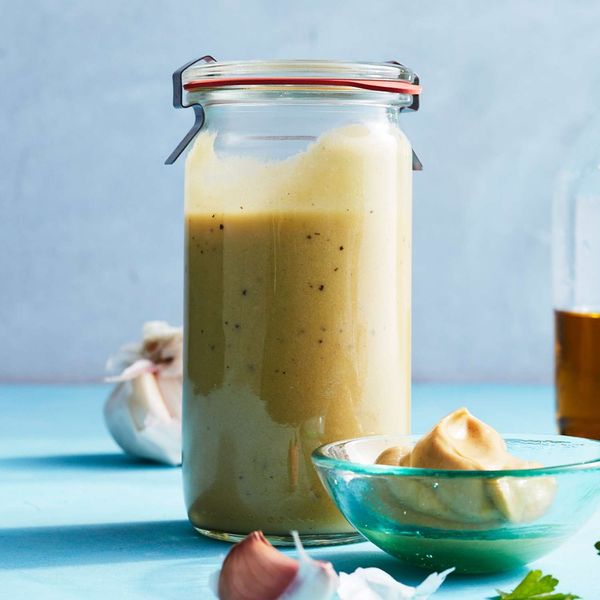
Vinaigrettes are easy to make, and with this recipe, all you need is a jar with a tight-fitting lid to mix and store it in. To make the vinaigrette, simply combine all of the ingredients in a jar and shake. The shaking action emulsifies the dressing, bringing the acid and oil together into a uniform mixture that’s ready to coat greens, roasted potatoes or anything else you want to jazz up.
Can I make Lemon-Garlic Vinaigrette ahead?
Yes! You can refrigerate the vinaigrette for up to one week. It will separate as it sits, so shake it again before serving.
What’s the difference between salad dressing and vinaigrette?
Salad dressing is often used as an umbrella term for any sauce that dresses a salad (which includes vinaigrettes), but technically speaking, the two are different. At their core, salad dressings, including vinaigrettes, are simple combinations of fat and acid. What differentiates the two is the fat that’s used. A vinaigrette features oil, whereas a salad dressing can feature oil but also typically includes a creamy element like mayonnaise, buttermilk or yogurt. Vinaigrettes tend to be thinner with fewer ingredients and a sharper taste, while dressings have more viscosity, a few more ingredients and a richer, more rounded flavor.


